English Language Usage: Confusing Words: "Then" and "Than"

Confusing Word Groups
There are a number of groups, or pairs, of English words, which can, it seems, confuse the reader, writer or speaker.
"Then" and "than" seems to be one set.
Other examples include 'effect' and 'affect'; 'their', 'there' and 'they're'; 'principle' and 'principal'; etcetera.
This confusion can cause a lot of problems.
Confusion of terms could, of course, result in misunderstanding.
It could also result in lack of respect for the writer.
Readers want to feel that an author is speaking from a place of knowledge and authority. Using an incorrect word will not help that writer to attain a good reputation.
A good tip would be for writers to check out any words, or groups of words, which they are unsure of, or which confuse them, and check that they are using them correctly.
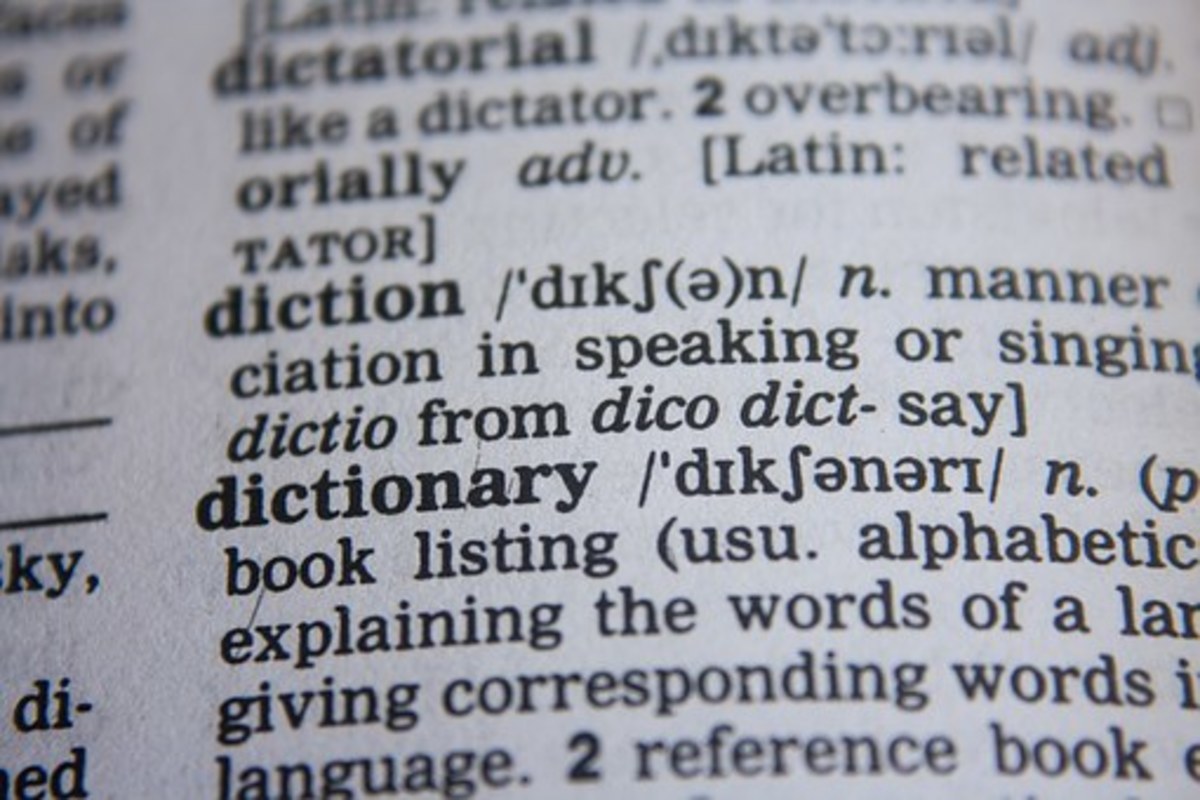
Keep a dictionary to hand!

A Confused Pair: 'Than' and 'Then'
A confused pair of words that I have noticed, recently, is 'than' and 'then'.
I have only noticed this error, since I have been interacting with Americans, on the Internet. It does not seem to be a common error amongst English people.
I assumed that this error must be related to accent. The 'a' and 'e' sounds may be more similar in American English, than they are in British English.
Alternatively, there may be a connection to the German language ~ and to the words 'dann' and 'denn'.
I tend to consider that 'than' relates to comparison and 'then' relates to time, but, though this is generally true, perhaps it is a little too simplistic.
Let us look at what the Websters and Oxford Online Dictionaries have to say on the matter.
We shall look at these two words in alphabetical order:
First: 'THAN'
Then: 'THEN'


'Than' in the Dictionary
I checked the Oxford and Websters Dictionaries:
'Than' can be a conjunction, or a preposition.
It can be used:
~ For Comparison (second element)
Janet is older than John.
Jack is no taller than Jim is.
~ To show exception, or contrast:
He has no shoes, other than the ones he is wearing
~ As an expression relating to something happening immediately after another event ~ but not to be confused with 'then'
No sooner had the house been built than it was demolished.


Some 'Than' Examples
Tim is stronger than Paul.
Sarah is no better off than Mary is.
He has no ideas, other than the ones he borrows from other people.
No sooner had she finished eating breakfast than she started to prepare lunch.
Fiona is smaller than he (is).
More than ..........
Less than ..........
Bigger than ..........
smaller than ..........
Taller than ..........
Shorter than ..........
Heavier than ..........
Lighter than ..........
Richer than ..........
Poorer than ..........
Etcetera
Well-known examples:
'Deadlier Than the Male' is a British 'James Bond' 'take-odd' film from1967.
'Better late than never' ~ a good old proverb
'Holier than thou' ~ someone, who acts as if they are of superior virtue

'Than' and Use of the Subjunctive
Grammatically, the subjunctive is traditionally used after 'than'.
Most of us do not know much about the subjunctive, or its uses, so I shall illustrate using examples;
'She is taller than he' is considered to be more grammatically 'correct' than 'She is taller than him'.
This is because, if written in full, the sentence could / would be: 'She is taller than he is'.
However, note that, in general ~ especially informal ~ usage, She is taller than him' is considered to be perfectly acceptable, while 'She is taller than he' is used in more formal situations.
But consider this:
'She likes her better than him' may sound a little clumsy, but it is grammatically correct.
This sentence could not be 'She likes her better than he', because the longer, fuller sentence would then be: 'She likes her better than he is' ~ which is, quite clearly, incorrect.

'Than' and Difference
Many people say 'different to' (usually in Britain) or 'different than' (usually in the USA).
Many people consider that these expressions are perfectly acceptable ~ and, certainly, living languages are evolving all the time, and these phrases are, indeed, becoming ever more acceptable.
However, for the writer, who wants to be respected for his / her work, it is always as well to use the 'correct' phrase. And, in 'correct' English, this should be 'different from'.
American English is often very different from British English.
But 'different from' is still better usage for the serious writer!



'Then' in the Dictionary
According to the Oxford Dictionery and Websters Dictionary, this common, short, every-day word has a surprising number of ~ connected ~ uses.
The word can be used:
~ to refer to a specific time: ~ at that time / at another time
~ after a preposition;
~ to mean 'following that / subsequently / consequently;
~ to mean 'in addition';
~ to mean 'in that case' - with the word 'if';
~ to mean 'in that case' when used for emphasis ~ often at the end of a sentence;
~ colloquially to complete a sentence.
(See examples below)
~ Than + Then ~ Than + Then ~ Than + Then ~ Than + Then ~
Grammatical Usage:
This word can be used, grammatically, in three different ways;
~ As an adverb
~ As an adjective
~ As a conjunction

Some 'Then' Examples
~ He arrived at two o'clock = he arrived then.
~ I was just a schoolgirl then.
~ By then, he was ready to go home.
~ The then headmistress was Miss Brown
~ She put on her business suit and then she left for work
~ They had three girls and then a boy
~ She goes to school all day ~ and then there's the homework!
~ If you follow the instructions, then you should complete the task easily.
~ So she's still going to meet him then.
~ If you don't have it, then who does?
~ I'll see you later then.

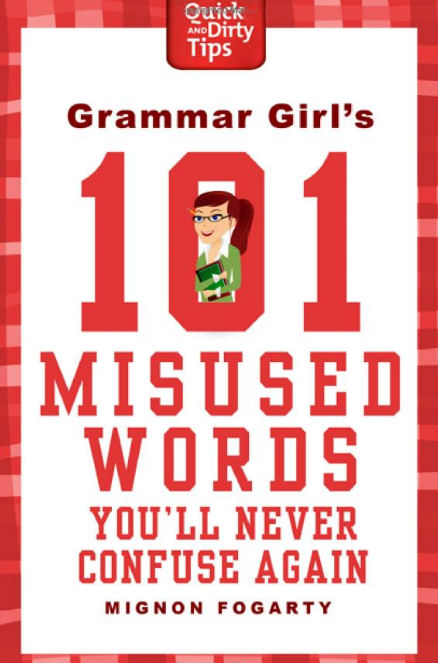
Mignon Fogarty
Some 'Then' Phrases
'Now and then' / 'Every Now and then' ~ occasionally.
Eg. I pop in to see her every now and then.
'Just then' ~ at a specific time past (possibly suddenly)
Eg. Just then, the door flew open
'By then' ~ by that time.
Eg The lecture ended after two hours. By then, I was bored and tired.
'Then again' ~ giving a different point of view.
Eg. I might go into Town later. Then again, I might not bother.
'But then' ~ another contrasting viewpoint.
Eg. She is very late, but then, she always did arrive late.
The phrases were provided by Websters Online Dictionary. The examples are my own.



History / Etymology: 'Than' and 'Then'
Both Oxford and Websters state that 'than' and 'then' were originally the same word.
Oxford gives a brief etymology.
Both words, 'than' and 'then', derive from German origins and became, in Old English, 'thænne', 'thanne' and / or 'thonne'. (þænne, þanne, þonne,)
Linguists have assumed an ancient origin in the Proto-Germanic 'thana'. (Proto-Germanic is a hypothetical ancestral Germanic language.)
'Then' is related to both the Dutch 'dan' and the German 'dann'.
German has evolved two related words ~ both 'dann 'and 'denn' ~ but they do not have the same meanings as 'than' and 'then'. Rather, they are both versions of 'then'.
According to the 'Online Etymology Dictionary', 'than' developed from 'then' and the two words were not differentiated from one another, as far as spelling is concerned, until around the year 1700.
This Etymological dictionary makes some suggestions as to how the 'then -> than' development may have occurred. This is one example that they give:
~ 'A is bigger, then ("after that") B.'
may have evolved into:
~ 'A is bigger than B'
An alternative suggestion that they give is that 'the word may trace to O.E. 'thonne' / 'þonne' ~ 'when, when as'.'

What about 'There', 'Their' and 'They're'
What about 'There', 'Their' and 'They're'? Well, they have their own hub.
To read it, see the link, below
'There', 'Their' and 'They're'
German 'Dann' and 'Denn'
In its vocabulary pages, the German textbook, 'Sprich Mal Deutsch 1', gives the meaning of both 'dann' and 'denn'.
*
'Dann' = 'then' (time)
This is one example used:
Zuerst ist Mutter sehr erschrocken und dann sehr bose
First mother is startled and then very angry.
Wissen Sie das nicht? ~ Dann sind sie nicht sehr intelligent!
You don't know that? ~ Then you are not very intelligent.
This is very similar to the 'in that case' use of 'then' Ie. 'If ...then...' usage.
Eg. If you don't know that, then you are not very intelligent.
*
'Denn' = 'then' (consequence)
This example is used:
Ich weiss, wenn es acht Uhr ist, denn der Wecker lautet sehr laut.
I know, when it is eight o'clock, then the alarm will ring very loudly.
(As a conjunction, 'denn' can also mean 'for'.)
This is not a lesson in German, so there is no need to remember this, it is simply to illustrate that both 'dann' and 'denn' can mean 'then' in German and, since English is a Germanic language, and both 'than' and 'then' had the same Germanic origin, then perhaps it is not so surprising that some people confuse the two.
(Interestingly, 'than', in German is 'als'!)

Pronunciation
'Than' has an 'a' in it.
It rhymes with 'man', 'pan', ran', etc.
'Then' has an 'e' in it.
It rhymes with 'men', 'pen', 'den', etc.
Both words begin with the same 'th' sound, so the tongue will start off between the teeth.
Wikihow explains how each word is spoken.
When saying 'than', the mouth should be wide open. After completing the 'th' sound, 'the tongue is then pressed down toward the teeth' and the 'throat is somewhat constricted'. 'The vowel ~ a ~ sounds from the back of the mouth'.
When saying 'then', the mouth should only be 'partially open'. After completing the 'th' sound, 'the tongue' simply 'rests'. The 'throat' is 'relaxed'. 'The vowel rises from [the] throat'.
More here:
http://www.wikihow.com/Use-Than-and-Then

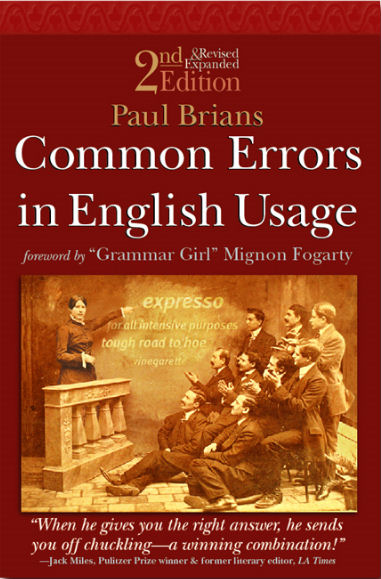
Paul Brians
How To Remember???
If we are having problems with this, then how do we know when to use 'than' and when to use 'then'?
It is all very well being told that these words mean different things, and must not be confused, but how does one remember which is which?
Everyone who has a problem with these terms needs to come up with a memory aid, which suits each of them, personally.
*
Here is one idea:
How about remembering a specific phrase, where the words rhyme?
Than ~ Jan is cannier than the man.
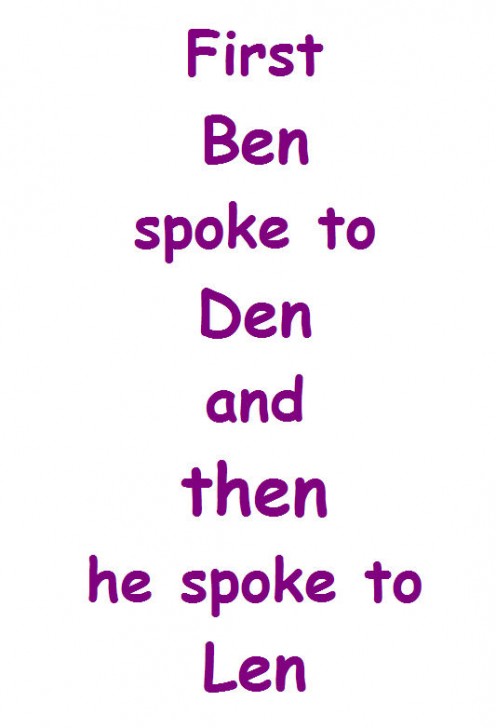
Then ~ First Ben spoke to Den and then he spoke to Len.

Online Advice
You can find more advice, on this subject, by searching online. Just key "than then" into Google.
There are also other hubs on this topic. Do check them out.
Online Dictionaries:
http://oxforddictionaries.com
http://www.websters-online-dictionary.org
http://www.etymonline.com
http://www.jebbo.co.uk/learn-oe/origins.htm


Conclusion
'Than' and 'then' have the same etymological origins.
It appears that they were once the same word.
In German 'dann' means 'then'.
Possibly, in certain parts of the English-speaking world, they are pronounced in a similar way.
For any, or all, of these reasons, some people confuse the words 'than' and 'then'.
*
Whatever the reason, it is important for serious writers to remember that ...
~ these are no longer the same word;
~ they are not interchangeable;
~ they are not spelled the same
~ they are not pronounced the same
~ the differences must be learned, understood and remembered!

Remember ....
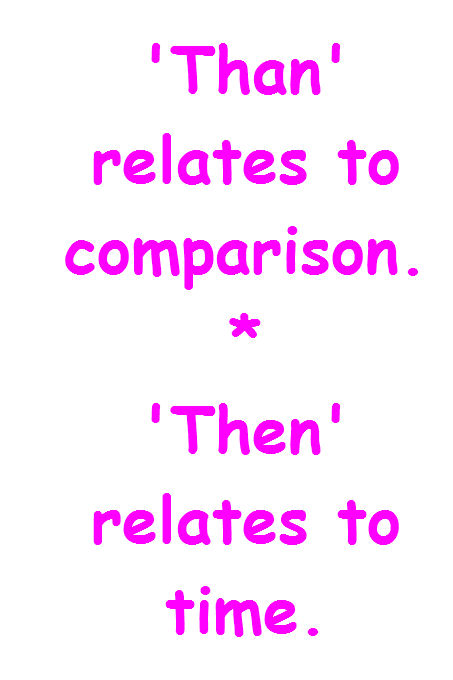
'Than' relates to comparison.
'Then' relates to time.
*
Here are some more practice examples to help with memory:
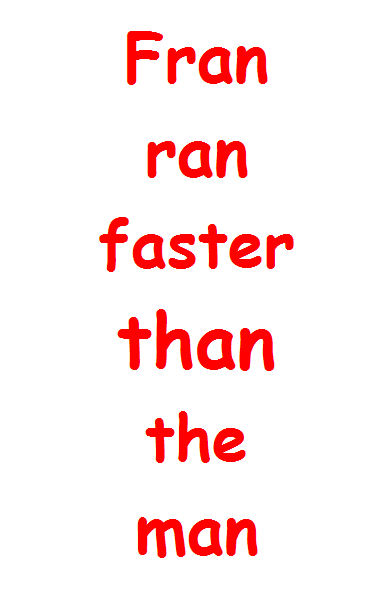
Fran ran faster than the man.
Jen spoke first to Ken and then to Ben.
*
Practise, practise, practise ~ until you are sure and happy about usage.
In American English, that's practice, practice, practice!
~ ~ ~ ~ ~ ~ ~ ~ ~ ~ ~ ~ ~ ~ ~ ~ ~ ~ ~ ~ ~ ~ ~ ~ ~ ~ ~ ~ ~ ~ ~ ~ ~ ~ ~ ~ ~ ~ ~ ~
Related Items By Trish_M: