Evolution - Creationists Right and Darwin Wrong ??!!

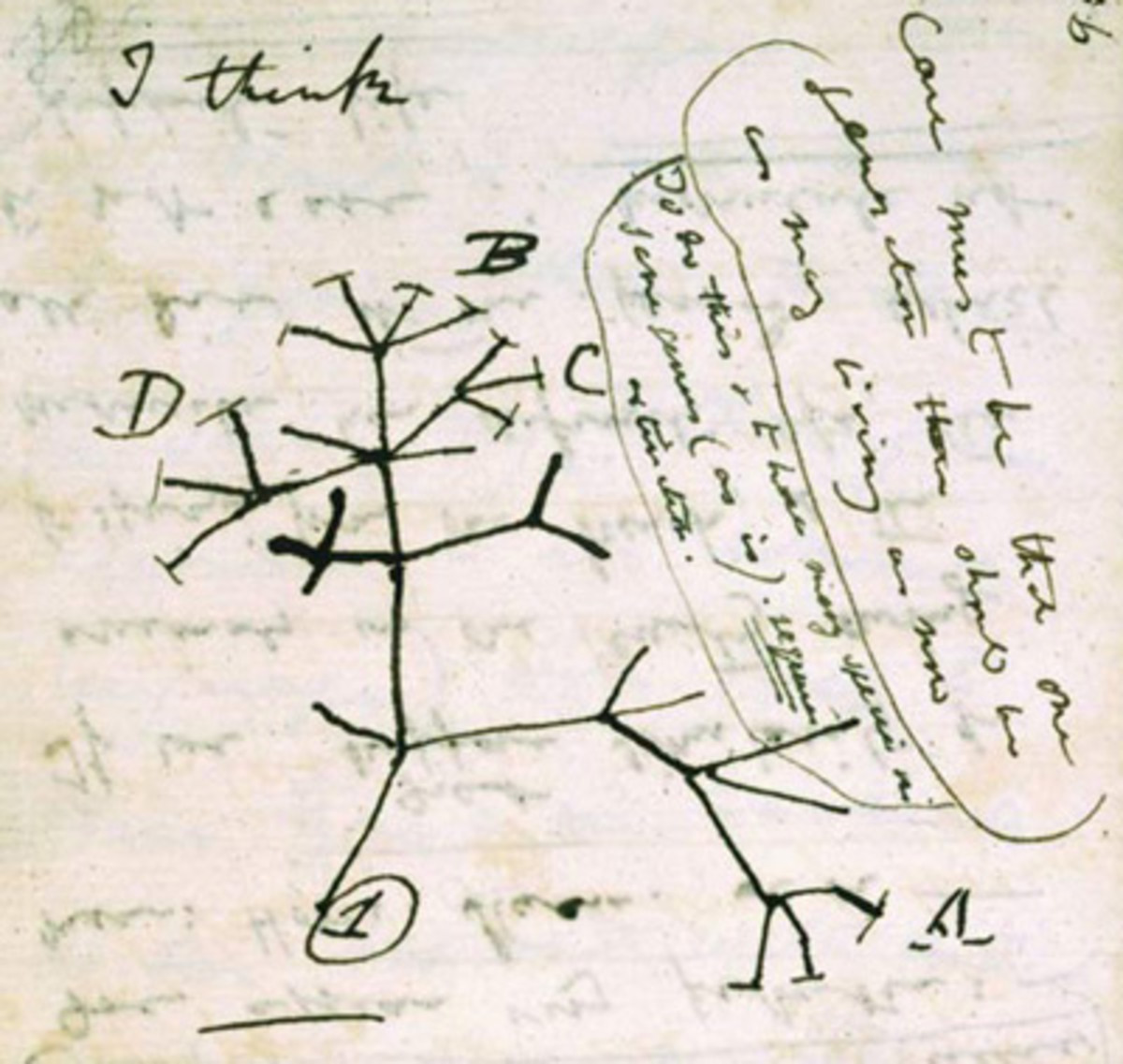
Charles Darwin
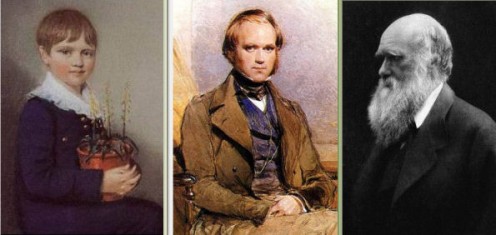
National Geographic Documentary: 'Was Darwin Wrong?'
In the 19th century, the naturalist Charles Darwin formulated a theory of evolution, which allowed for adaptation and change of organisms ~ even into new species ~ as a result of natural selection, mutation and genetic drift.
The Bible, however, tells a different story ~ a creation story, whereby God, in seven Biblical days, created all creatures of land, sea and air, along with humans to have dominion over them.
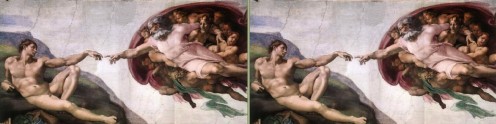
Evolutionary theory allows for complex humans evolving from simple sea creatures, whereas Creationism states that man was moulded from clay, in the image of God, and had life breathed into him, by this creator God.
Creationists are very certain that they are right, and there are a large number of Creationists ~ especially in the USA.
A NatGeo documentary looked into their claims and the result was the documentary: 'Was Darwin wrong?'
Acknowledgement: For this hub, I have used the National Geographic documentary 'Was Darwin wrong?' as my main source of information and I have supplemented this information with insights from other websites and books. I have also based some of my comments on my own opinions and pre-existing knowledge.
I have written another hub, looking at whether Creationists could be correct, but from another angle. The link is with those to my other 'evolution' hubs, later in this item.
To see videos of the documentary, please go to the end of the hub.
* * * * * * *
Tricia Mason
With the exception of quotes, photos, etc, from others, where I hope that I have credited them correctly, the work in this article is my own. Copyright Tricia Mason. All Rights Reserved.
"And God Created Man In his Own Image"
The Creationist Assertions and Arguments
The NatGeo documentary looked at a number of points put forward by creationists:
~ The Bible is God's word and it states that everything was created by God 'just as it is today'.
~ The Earth is only a few thousand years old.
~ It is impossible to believe that a 'blind undirected force' could transform simple single-cell organisms into the complex life that we have on earth today.
~ Certain attributes ~ such as the eye ~ are so complicated and amazing that they could only be the result of an intelligent supreme designer.
~ It is impossible that humans should have evolved from apes ~ and it is even more unbelievable that humans have evolved from fish.
~ There is no proof of evolution ~ there are enormous gaps in the 'evidence'.
~ Evolution supposedly allows for mutations which protect creatures from their predators, so the existence of brightly-coloured birds ~ like peacocks ~ which attract predators, are proof that evolution is a lie.
*
And there are more arguments:
~ Change cannot just happen. Species remain more-or-less the same.
~ Creatures that belong to one species cannot give birth to other species.
~ Evolution is only a theory.
~ No-one has ever actually seen evidence of evolution. Thus, it is faith-based.
"The Bible is God's Word"
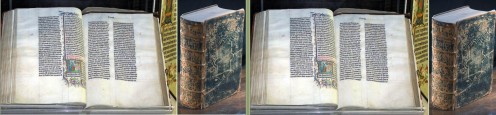
The Bible and Genesis

The Bible is God's Word
Christians believe that the Bible is either the literal word of God or the inspired word of God.
Accordingly, anything that is contained within the Holy Bible must be true.
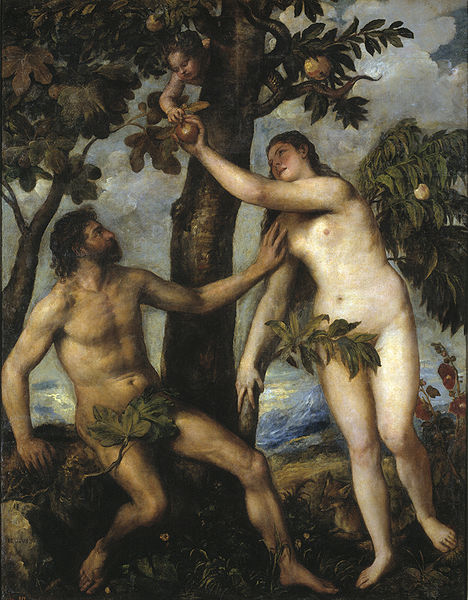
The Bible states that God created man in his own image ~ that he moulded Adam from the dust of the ground, and Eve from one of Adam's ribs.
Since the Bible is God's own book, this must, in the opinion of the creationist, be completely true.
If it is, indeed, true, then Darwin and evolutionary theory, must be wrong!
But this is a religious belief, based on ancient scriptures; it is not scientific, nor should it be considered so.
People should be free to believe this, if they so wish, but it cannot be taken as proof that evolution is not true.
This does not prove that Darwin was wrong.
Adam and Eve ~ Genesis
'Earth's Oldest Rocks'

The Earth is Young - So Is Life on Earth
Some Creationists believe in the 'young earth' theory and some do not. Some would say that the age of the Earth is not relevant to evolution. However, the two are interlinked, because a 'young Earth' would not allow for very ancient life.
The geologist, mentioned on the TV programme, was Dr. Martin Julian Van Kranendonk, who is author of 'Earth's Oldest Rocks'.
Quote:
"The geological history of early Earth holds a certain fascination, not just for professional Earth Scientists ..., but for ... many in the general public. This ... is .. because .. it casts light on the fundamental issues of our existence: who are we; how are we here?" ~ Martin J. Van Kranendonk, R Hugh Smithies and Vickie C Bennett
What age do geologists give to the Earth and how does that date the earliest life?
They say that the Earth is billions of years old ~ and they are the experts on this subject.
What about life?
Very, very ancient fossilised stromatolites have been found in extremely ancient strata in Australia.
Geologists can tell which life is earlier, and which is later, according to the level of rock or earth in which they are found. Stromatolites are found in very early layers.
Geologists can also date fossils, using radiometry, which is, according to the documentary, correct to within 0.1%.
The stromatolites in question have been dated to 3.56 billion years in age.
Quote:
"Stromatolites are structures formed by huge colonies of cyanobacteria, formerly called blue green algae." ...In addition to existing in fossilized form, a colony of living stromatolites was discovered in Australia in 1956. [ http://www.wisegeek.com/what-are-stromatolites.htm ]
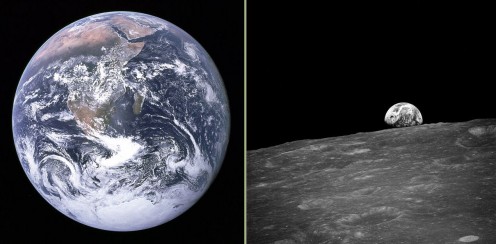
The Earth is old ~ very old!
And so is life on Earth.
Darwin ~ and evolutionary theory ~ are not wrong about this.
The Earth Is Old!
A 'Blind Undirected Force'; Single-Cell Organisms; Complex Life
Many Creationists believe that all life was created, by God, in a Biblical week, just as it is, was and always will be ~ so that there has never been any need for it to 'evolve'.
They claim that the idea of single cell organisms changing into modern humans ~ even over long periods of time ~ is so ridiculous as to be impossible.
Certainly, at first glance, it does sound implausible, but what evidence is there for and against?
If the creationists are correct, then all sorts of animals, no matter how simple or complex, should be found in all geological layers.
If the evolutionary scientists are correct, then only very simple organisms will be found in the earliest strata ~ and more complex creatures will be found in later layers.
'Darwin thought that life started with one, or a few, simple living things' and that these evolved to form 'today's millions of complex species'. Thus evolution has led to 'variety and complexity'.
What are the facts?
As we have already noted, the earliest evidence of life found on Earth, in the most ancient layers of rocks, were the stromatolites ~ and stromatolites are made by simple, single-cell bacteria. They lived over three and a half billion years ago. No other life is found in these early strata.
Do later geological layers yield evidence of more complicated life?
~ Yes, indeed.
In the layers relating to 2.1 billion years ago, the first cells containing a nucleus are found. These are the types of cells found in most life existing on Earth today.
About 600 million years ago, the first animal life is seen ~ creatures similar to sea anemones.
By 500 million years ago, life had become 'more varied and complex' ~ and the evidence for this is seen in the later geological strata.
If the Creationists were correct, then all fossilised life would be found scattered throughout all of the strata. This is not the case.
If Darwin's theory of evolution is correct, then ever more complex life forms would be found as the eons go by ~ and this would be illustrated in the geological layers. This is, indeed, the case.
Earth's creatures did not 'arrive' on the planet all at the same time. Simple ones came first and life became ever more complex.
Darwin was not wrong on this issue.
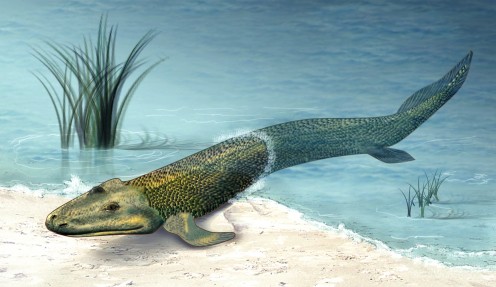
Reconstruction of Tiktaalic - Found Where Expected to be Found!
Darwin and His works

If Darwin Was Not Wrong, Just How Was He Right?
Darwin believed that simple creatures evolved into slightly more complex creatures, and that these, in turn, evolved into yet more complicated organisms. It was a very slow process.
He believed that these changes occurred as organisms adapted to their environments. Creatures which were not suited to their environments would die. Those which fitted well, would survive. (This is what is meant by 'survival of the fittest'.) The creatures which survived would pass on their suitable traits (genes / alleless) to their young.
Often, mutations would occur. Unsuitable mutations would, most likely, result in death; beneficial ones would be retained ~ and could be inherited by offspring.
Darwin noted that 'nature was brutal' and that the 'relentless slaughter' meant that many creatures died before reproducing. For the most part, those which survived had traits which would allow them to survive and thrive in their environments. These traits would be passed on. This was evolution by 'natural selection' ~ and it includes 'mutation'.
What, in the short term, produced small changes, over hundreds and thousands of years, produced ever larger changes. Eventually, change would be so huge that an entirely new species would have evolved. 'Life became more complex'.
A change in environment could produce more species changes. Thus, brown bears, which traveled to live in the snowy arctic, would be more likely to survive if they were light in colour ~ and, indeed, white bears ~ polar bears ~ evolved. 'One species had become two'.
'Life would become more complex and more varied'.
We can see from the fossil evidence and from looking around us that life has become more complex and varied since simple blue-green algae were the only colonisers of the planet.
The 'Was Darwin Wrong?' documentary pointed out that just one forest in Panama contains a huge variety of species ~ thousands of them in just a small area. Research entomologist, David Ward Roubik, commented on the 'dazzling diversity'.
The fossil evidence shows that life began with very simple organisms. In the earliest geological strata there is evidence of only one type of life ~ and this is a very simple form of life. Stomatolites are evidence of very simple bacteria.
The evidence of our own eyes ~ coupled with that provided by experts ~ shows that the planet Earth is now populated with a huge variety of living creatures, including both simple and complex organisms.
When Darwin indicated that simple creatures had evolved into more complicated organisms and that life had, thus, become 'more varied and more complex', he was not wrong.
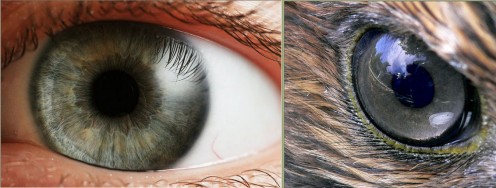
Human and Hawk Eyes
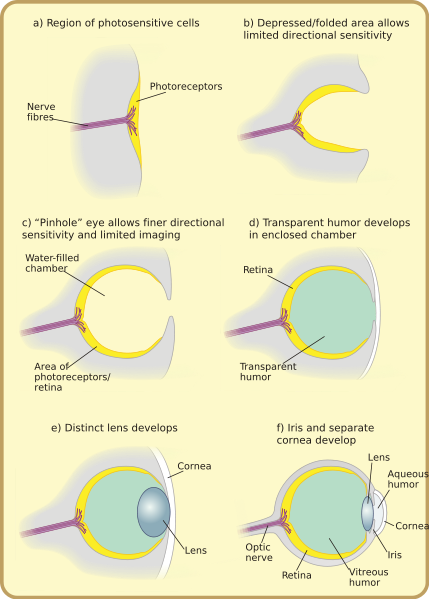
Evolution of the Eye - Diagram
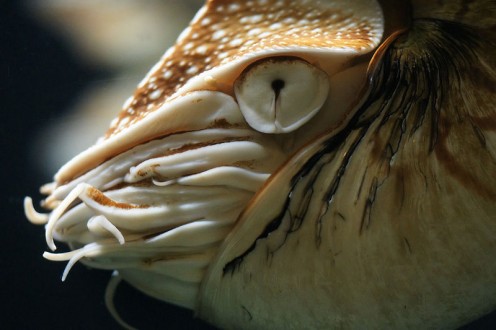
Nautilus Pompilius Head - Showing Pin-Hole Eye
A Hub on the Eye
The Eye and Other Impossible Organs
The eye is an example of an organ, which is considered, by Creationists, to be so complex ~ with its lens, iris, photo-receptors, etc ~ that it 'could not possibly have evolved by chance'. They argue that it must, therefore, have been the work of, and, indeed, proof of, an intelligent designer ~ God.
Creationists also argue that, since the eye is only useful when 'fully formed', it cannot possibly have evolved, because a 'partially-evolved' eye would have been useless and, so, would not ~ could not ~ have existed.
Is this true, or could the eye have 'evolved in small, advantageous developments'?
One expert, who appeared on the 'Was Darwin Wrong?' documentary, was zoologist Dan-Eric Nilsson, of the Lund University in Sweden. He showed the audience a box jellyfish, which proved that various kinds of eye can exist and do exist ~ even today ~ since this creature, which has 'no brain', has twenty-four eyes ~ 24 different simple eyes.
So how could the eye have evolved?
The earliest eye would just have been 'a patch of light-sensitive cells' on the surface of the organism. As its description implies, it would simply be able to sense light and dark.
The next step would be a slight depression in the light-sensitive area on the surface of the organism. This very slight difference would mean that the creature would not only be able to sense light and dark, but could tell where the light was.
If the 'slight depression' became deeper, with a 'narrow opening', then the organism would be able to tell from which direction any light was coming. These are known as 'pit eyes'.
Pit eyes are not 'imaginary'. They exist. Flat worms have 'pit eyes'.
The development, from the patch of light-sensitive cells to pit eyes is a straightforward step-by-step improvement in the ability to 'see' ~ evolution at work.
If the opening in the 'eye' becomes smaller and smaller, then the image viewed will become clearer and clearer. The 'dip' will be full of water. There is no cornea or lens. The image seen is certainly not as clear or bright as the image seen by a healthy human eye. The resolution is low and the 'picture' is dim, but it is adequate for certain creatures. This is known as the 'pin-hole eye'.
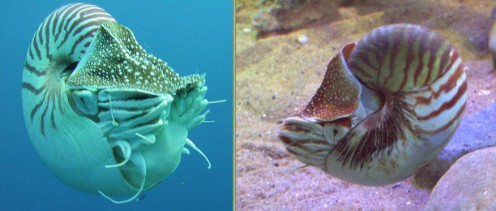
Pinhole eyes are not 'imaginary'. They exist. The nautilus has 'pinhole eyes'.
To be able to focus well, in order to see more clearly, this pinhole eye requires a lens. With an iris, and a lens, a sharply defined image could be picked up by a retina. Water plays its part in this.
The pinhole could then close up. The water inside the sealed spherical chamber would become denser ~ the 'humor' of the eye. Development could continue with a water-inflatable lens. These small additional steps would also include the development of a cornea. A 'retina' has, in effect, existed all along ~ since those first 'light sensitive cells' evolved on the surface of a simple organism.
Although the eye is an amazing organ, and Darwin, himself, said that it seemed "absurd in the highest possible degree" that it should have simply evolved, it did just that. And Darwin knew that, in fact, it was possible. He wrote that "...if numerous gradations from a perfect and complex eye to one very imperfect and simple, each grade being useful to its possessor, can be shown to exist; if further, the eye does vary ever so slightly, and the variations be inherited, which is certainly the case; and if any variation or modification in the organ be ever useful to an animal under changing conditions of life ...", then evolution of the eye was real, even though "insuperable by our imagination".
The eye began to evolve more rapidly during the Cambrian period (543 million years ago), because of an increase in 'competition'.
Other organs that appear to have been too complex to evolve ~ but which did, all the same, are pumping hearts and the rapidly beating wings of, for example, the hummingbird.
Darwin acknowledged that it was difficult to believe that the 'miraculous' eye could have evolved by natural selection, but we have the evidence to show that it was perfectly possible ~ and, indeed, that creatures, alive today, can live successfully with the less developed eyes.
It is not the case that the eye could not possibly have 'evolved' by chance.
It is not the case that the 'partially-evolved' eye would have been useless.
Darwin was not wrong about the evolution of the eye.
Nautilus
Dr Dan Eric Nilsson - Evolution of the Eye
Tiktaalik - Fish? Land Creature? Both??!!
Evolution of Humans from Fish is Simply Unbelievable
How could a fish give birth to any creature other than a fish ~ a bird, for example, or a human?! From the viewpoint of the creationist, it couldn't. It is impossible. One species cannot, and does not, give birth to another. It is, therefore, ridiculous to imagine that an ape could evolve into a human ~ to say that a fish could evolve into a human is totally preposterous!
But evolutionists don't believe that fish, or even apes, ever gave birth to humans!
To say that a fish, or even an ape, evolved into a human, does not mean that a fish or an ape ever 'gave birth to' a human. That, indeed, would be preposterous. Evolutionists do not believe this; neither do they believe that any fish, or even ape, ever 'turned into' a human!.
Evolutionists do, however, believe that fish evolved into apes, which evolved into humans. That is another matter!
The relationship between humans and apes is close; the relationship between humans and fish is not nearly as close.
Did it really happen? Did fish evolve into all of the land animals ~ including humans?
Evolutionists say that they did. Is there any evidence for this?
The 'Was Darwin Wrong?' documentary explained the process;
'Four and a half billion years ago, the Earth formed'.
'Four hundred million years ago our ancestors were primitive fish'.
'Three hundred million years ago, 'we' were amphibians'.
'Two hundred and fifty million years ago our fore-runners were reptiles'.
Fossil evidence tells this 'extraordinary story'.
But, claim the creationists, gaps in the evidence 'cast doubt' upon this story.
Neil Shubin of the University of Chicago sees the gaps as a challenge ~ part of the 'joy of science'.
He believed that there was enough evidence to indicate that fishes were ancestors of humans, but he wanted to find a fossil fish that could actually be that ancestor. He sought actual physical proof.
Shubin knew where to find rocks that were 375 million years old ~ in other words, rocks dating from the time just before the first land animals appear in the fossil record. His team searched Ellesmere Island.
Ellesmere Island is '600 miles from the North Pole', but it used to be a 'tropical' area, situated on the equator. It 'moved north via the action of plate tectonics'. Shubin was seeking 'tropical life in an arctic landscape' for five years, before he finally found what he was looking for ~ in 2004.
In 2004, in 'a layer of skeletons', Shubin and co found a 'flat-headed creature' with a snout. It was somewhat 'crocodile-like' in shape. This creatures, which they named 'tictaalik' (meaning 'large freshwater fish'), 'bridged the gap' between fish and land animal. It was a 'true missing link' ~ a 'sea creature, which walked on land'.
Like fish, it had scales and fins.
Like land animals, it had a neck and a flat head with eyes on the top.
Yes, only 'one thousandth of species are preserved as fossils', so, certainly, there are some 'missing' ones, but experts are seeking ~ and finding ~ the ones that they need! And there are, already, enough fossils to provide evidence for evolution ~ even from fish to humans, as amazing and incredible as that may sound.
Just one well-known example of a link fossil is the archaeopteryx, which bridges the reptile-bird gap.
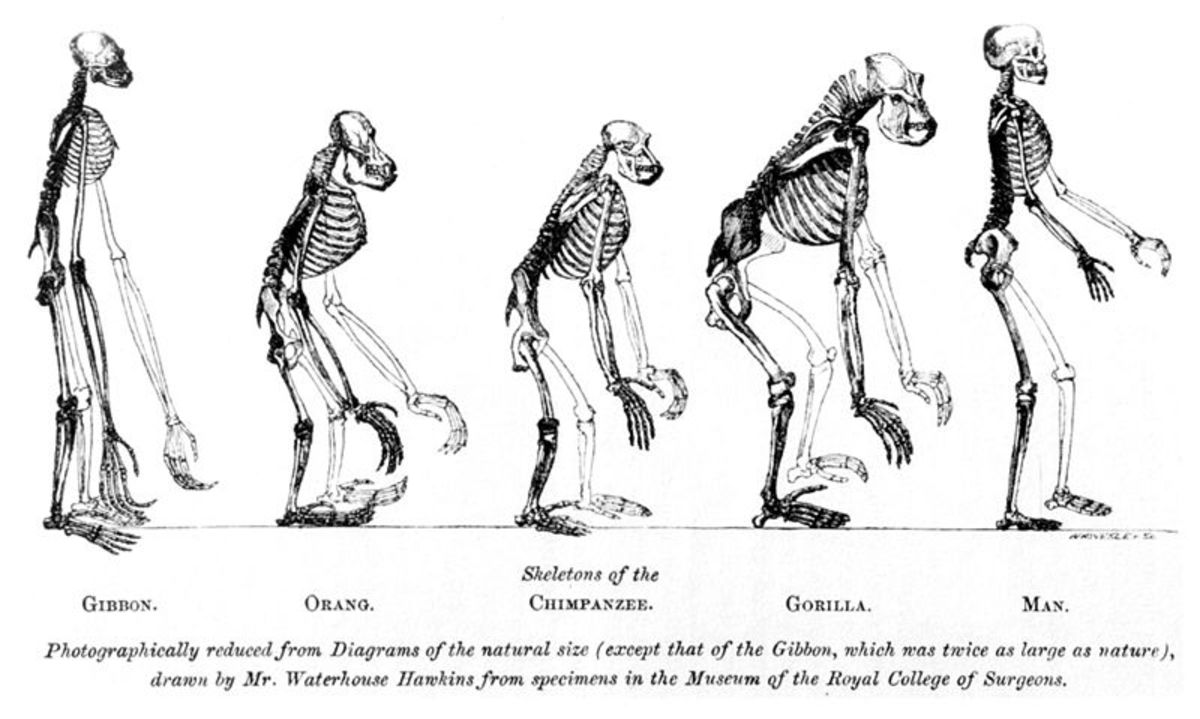
As for humans, researchers in Africa have found 'over a dozen species of hominid'. These illustrate the 'step-by-step' evolution, from 'the ape of four million years ago', to the modern human of today. Increased brain size, the change to walking on two legs, the use of ever more complex tools, etc ~ all are recorded.
The record shows natural selection from simple creatures to complex new species ~ including us humans!
The evidence indicates that Darwin was not wrong.
Your Inner Fish
Our Ancestors Were Fish??!!
![by Neil Shubin Your Inner Fish: A Journey into the 3.5-Billion-Year History of the Human Body(text only)[Hardcover]2008](https://m.media-amazon.com/images/I/41BvTJGarFL._SL160_.jpg)
Neil Shubin and Fish
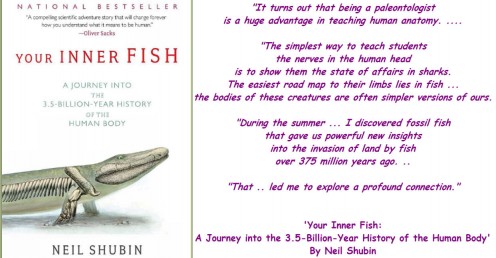
Neil Shubin, Provost of The Field Museum and Professor of Anatomy at the University of Chicago, has written a book on the subject of our fishy ancestry; 'Your Inner Fish: A Journey into the 3.5-Billion-Year History of the Human Body'.
It is available from Ancestry, where a review, from Oliver Sacks, Professor of Clinical Neurology at Columbia University, states: "Your Inner Fish is my favorite sort of book ~ an intelligent, exhilarating, and compelling scientific adventure story, one which will change forever how you understand what it means to be human.”
Of 191 reader reviews 128 gave it 5 stars out of 5. None gave it fewer than 3
*
Other books that look interesting, are 'The Tangled Bank: An Introduction to Evolution' and 'At the Water's Edge: Fish with Fingers, Whales with Legs, and How Life Came Ashore but Then Went Back to Sea’ ~ both by Carl Zimmer.
Hardcover published by Pantheon in 2008 / Paperback published by Vintage in 2009
Some 'Fossil' Books
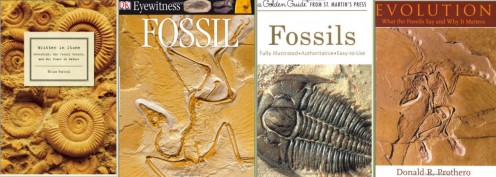
Fossil Evidence

Gaps in the Evidence
Creationists believe that there are still many 'missing links' ~ gaps in the fossil evidence ~ to the extent that 'belief in' the theory of evolution, is as much a matter of faith, as is belief in the Genesis story.
When Charles Darwin first developed his theory, and when his 'On the Origin of Species' was published, in 1859, these 'gaps' were, indeed 'enormous' ~ gaps in general human knowledge; gaps in the fossil record; etcetera. The 'crucial missing links' ~ that is the fossils of 'transitional animals' ~ were necessary to show evidence of the step-by-step evolutionary journey.
But that was then.
Gaps in the evidence have already been noted, but they are no longer a major barrier. There are quite enough fossils available to strongly support ~ if not prove ~ the truth of the theory of evolution. And more examples are being found all of the time. Museums throughout the world contain hundreds and hundreds of them.
As Richard Dawkins asserts, the 'missing link' is no longer missing! There are more than enough fossils for the needs of the evolutionary scientists and Dawkins also asserts that they are no longer even necessary to prove evolution true ~ they are just a useful bonus.
When Darwin was alive, there were gaps in the evidence, which had the potential to cause problems for his theory, but as more information is discovered ~ including fossil evidence ~ they support his theory ~ they do not negate it.
The 'missing links are no longer missing' and Darwin has not been shown to be wrong.
Richard Dawkins on Fossil Evidence

Richard Dawkins

Darwin and Mendel
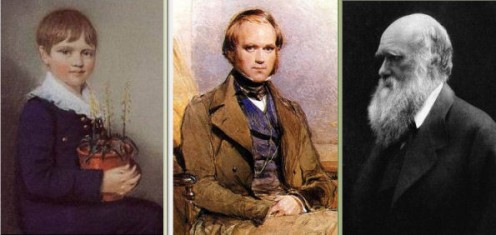
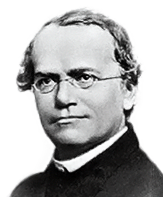
DNA and the Missing Link
Modern studies in Genetics have given a huge amount of support to the theory of evolution and have provided much additional useful information.
If Charles Darwin and Gregor Mendel had been able to meet, and work together, one can only imagine the amazing results that their combined work could have provided.
But scientists had to wait until Mendel's discoveries were 're-discovered' before the information could be applied to Darwin's work.
They have supported it.
The story of evolution is in the genes. Genetics has vindicated Darwin; not proven him wrong.
Sean Carroll on DNA and Evolution
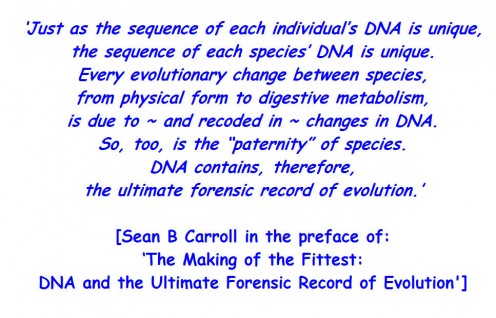
Sean B Carroll: 'The Making of the Fittest'

Mutations Which Attract Predators
Evolution, by natural selection, supposedly allows for beneficial traits to prevail over harmful traits. Thus, the fact that some birds are so showy that they attract predators, seems to be evidence against evolution ~ which favours the Creationist claim. They feel that this must prove Darwin wrong.
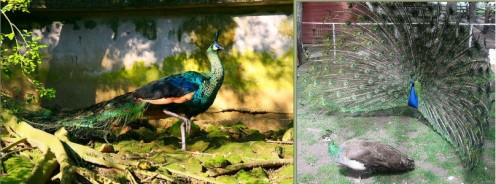
One of the most showy male birds is the peacock ~ and the peacock is the prey of the tiger. The peacock's beautifully bright and patterned tail makes his position obvious to his predator and also makes it difficult for him to get away. He is almost 'begging to be eaten'. Creationists think that this goes so much against evolutionary theory that God must have created him.
What do evolutionists make of peacocks and other brightly-coloured birds?
They are, indeed, puzzled.
However, they think that there must be a rational explanation for a tail that appears to be less of a help and much more of a hindrance.
There is an explanation. Within what Darwin termed 'natural selection' he included 'sexual selection'. For a male to father the next generation, he needs to be attractive to the female ~ and the peacock tail seems to be very attractive to peahens ~ the more showy, the better!
Thus the most attractive peacock ~ the one with the biggest, showiest tail ~ makes the statement that he is strong and has good quality genes. He will father strong healthy offspring. Since the brightly-coloured birds were favoured to pass on their genes to the next generation, the dull-plumaged male birds died out.
Behaviourist Marion Petrie, of the University of Newcastle, decided to experiment with this conclusion. If the showiest male birds had some of their tail feathers removed, and these feathers were added to the tail of a less showy bird, what would happen?
Petrie tried this and the results were exactly as expected. The once-popular males lost their followers and the newly-enhanced birds were shown more attention by the females.
The beautiful bright and colourful feathers of certain male birds may, at first glance, appear to contradict the theory of evolution, but the truth is that it fits with Darwin's description of sexual selection. It does not prove Darwin wrong.
The Peacock's Showy Tail
Species Remain The Same + Don't Give Birth to Different Species
Apes do Not Give Birth To Humans ~ Or Turn Into Humans!
I do not recall this being mentioned in the TV programme, but it is something that I hear, regularly!
Creationists use this argument against evolution.
And they are correct; species do not give birth to different species.
Does this, then, prove Darwin, and evolutionists, wrong?
No! Because no evolutionist believes that one species will give birth to another species. That is not what evolution is about.
Change is gradual (although it is considered possible that there are periods of hardly any change followed by periods of relatively rapid change).
If we take the ape-human example, of course no ape ever gave birth to a human (and certainly never turned into a human) ~ but she may have given birth to a 'child' with a mutation that became a human attribute. This pattern may have been repeated over generations, with certain 'human' type traits being passed on and certain ape-type traits being lost ~ until the ape evolved into the human.
Over several generations, the offspring might gradually become more human and less ape.
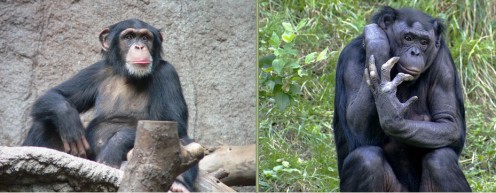
Parallel to this, certain offspring evolved into chimpanzees. Chimps and humans are very closely related species, so this is quite feasible.
It would be a very different if evolutionists had suggested that, for example, elephants had evolved into rabbits ~ or even humans. They are not closely-related species.
A lot depends upon the closeness of the species. A brown bear could 'evolve into' ~ not turn into ~ a polar bear, over a relatively short period of time, because they are so closely related.
This does not prove either Darwin, or evolution, wrong.
Chimpanzees and Bonobos are Closely Related to Humans!
If Apes Had Evolved Into Men; Then Apes Would No Longer Exist
I am not sure that this argument was mentioned in the 'Was Darwin Wrong?' documentary, but it is one that I have heard ~ often!
How can apes ~ or even fish ~ have evolved into humans, when both apes and fish still exist!?
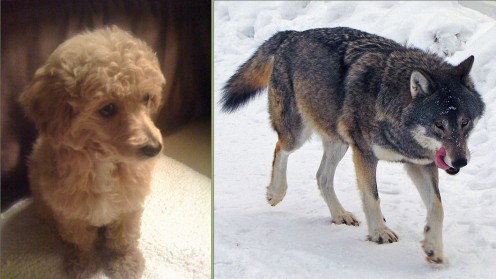
This argument, though, does not hold water, since the answer is that this simply can and does happen ~ and it is obvious all around us. The offspring of some wolves, over generations, evolved into dogs ~ but wolves still exist.
Some types of creatures, which are amongst the ancestors of creatures alive today, will have become extinct; but others will still survive.
This is not an argument against Darwin or evolution.
Wolves Have Evolved into Dogs - And Wolves Still Exist
Only A Theory
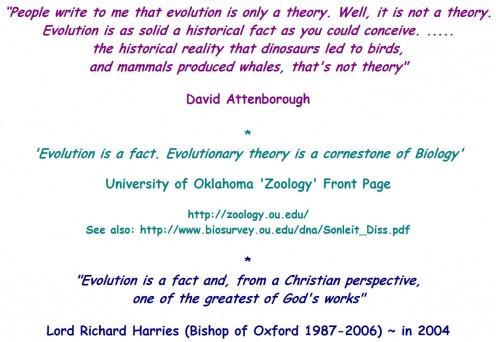
Another point, which creationists often raise, but which was not addressed in the documentary, was the claim that evolution is 'only a theory'.
Surely, creationists ask, if it were true, then it would not be dismissed, even by experts, as just a 'theory' ~ would it?!
The answer is that 'scientific theory' is based upon experience and experimentation and has been tested by experts. A 'scientific theory' might even, in common parlance, be called a fact.
So this does not indicate that Darwin was wrong!
Not Just a Theory!
No-One Has Ever Seen Evidence of Evolution ~ It is Based on Faith ~ Evolution is Equivalent to a Religion
Another argument I hear from creationists is that no-one has ever actually seen evidence of evolution.
Since the evidence has never been seen, then it has all been taken on faith.
Thus 'evolution' is the equivalent of a religion with no real scientific basis at all.
Clearly, evolution is based on scientific research. To say that it is faith-based is like saying that belief in the force of gravity is faith-based.
As Donald R Prothero writes, in ‘Evolution ~ What The Fossils Say and why It Matters’:
“Evolution is not a religious tenet which one swears allegiance to or belief in as a matter of faith. It is a factual reality of the empirical world".
And people have, indeed, seen evidence of evolution:1. It can be seen in our 'genetic record'.
2. It can be seen in the fossil record ~ in spite of misleading arguments to the contrary.
3. It can be seen by examining human bones ~ quite recent ones, in fact.
4. It can be seen by examining the bodies of living people.
Human Bones;
When researchers examined skulls from people who had died in Medieval and Tudor times, and compared them with skulls of modern living people, they discovered appreciable differences. Their bodies had evolved.
Living Bodies:
When the circulatory systems of the inhabitants of high altitude villages around Mount Everest were investigated, it was found that they were different from those who did not live at high altitudes. Their bodies had evolved.
So evolution continues ~ albeit slowly. But Darwin always said that it was a slow process, so this does not prove him wrong.
Was Darwin Wrong and Are the Creationists Right?
The 'Was Darwin wrong?' documentary looked at a number of assertions by creationists which, they believe, prove evolution wrong ~ and I have added yet more arguments to that list.
However, it appears that none of them stand up under scrutiny, and none of them indicate that Darwin, or the theory of evolution, is wrong.
What conclusions did the documentary draw?
~ 'Objections to Darwin do not stand up'
~ 'Science proves them wrong'
~ There is 'overwhelming evidence'
~ It is the 'only rational explanation'
*
Are the creationists right?
No, it appears not.
Was Darwin wrong?
No. As Mike Levine commented, he has been 'vindicated in everything'.
Darwin was not wrong!
*
After reading this, could anyone ask why evolution is wrong and Adam and Eve is right?
Darwin Vindicated
My 'Evolution' Hubs
Other Hubbers' Evolution / Creation Hub
- Evolution for dummies
By Jesus was a hippy - Evidence Of Evolution In The Human Body
By melpor - Evolution And Creationism: A Personal Side To The Debate
By graceomalley